

Description
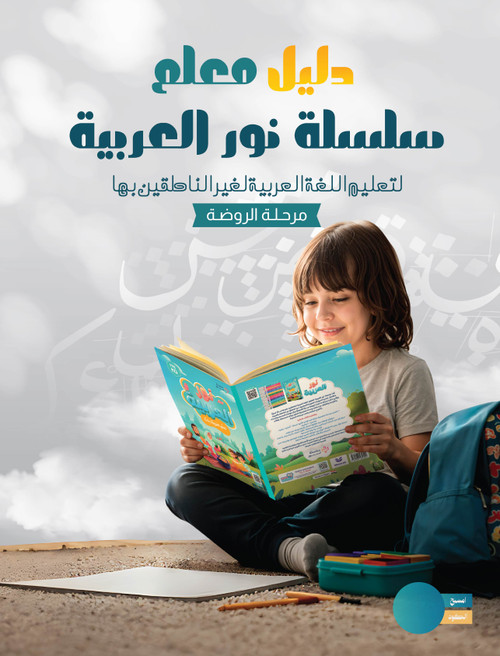
This Teacher’s Guide is thoughtfully developed as a practical and professional resource to support educators teaching Arabic as a foreign language at the kindergarten level. Recognizing the unique nature of early childhood education, the guide provides teachers with a clear and structured framework for presenting language in ways that are both engaging and developmentally appropriate. It bridges linguistic objectives with sound pedagogical practices, ensuring that young learners are introduced to Arabic in a supportive, meaningful, and enjoyable environment.
The guide carefully explains how to handle linguistic content—such as vocabulary development, basic sentence structures, listening skills, and early speaking practice—while maintaining a strong focus on the social, emotional, and cognitive characteristics of children in this sensitive stage of growth. It offers practical strategies, classroom techniques, and activity ideas that encourage interaction, play-based learning, and gradual language acquisition. Teachers are guided on how to create a positive classroom atmosphere that nurtures curiosity, confidence, and a love for learning Arabic.
In addition, the book emphasizes the importance of adapting instruction to meet diverse learner needs, helping teachers respond flexibly to varying language backgrounds and learning styles. Clear guidance is provided on lesson planning, classroom management, and the integration of educational values within language instruction. By combining professional insight with practical application, this Teacher’s Guide empowers educators with the tools and vision necessary to deliver effective Arabic language instruction at the kindergarten level with confidence and creativity.
Created by expert scholars from Al-Azhar and Cairo University. This story follows the path of Ahl as-Sunnah wal-Jama'ah for ensure authentic, accurate, and age-appropriate learning.