
May 6th 2026
Pillars of Hajj Explained Step-by-Step
You're standing in your hotel room in Makkah. Tomorrow is the 8th of Dhul Hijjah. Hajj begins. Your lifelong dream is about to happen.
But you're nervous. Terrified, actually.
So many rituals. So many steps. So many things that could go wrong.
Your friend tells you: "Don't worry. Just make sure you do the pillars. Those are non-negotiable. Everything else has solutions."
But what are the pillars? How do you do them? What if you mess up?
Let me be clear: Hajj has mandatory acts (wajibat) and essential pillars (arkan). Miss a mandatory act? There's a penalty sacrifice. But your Hajj is still valid.
Miss a pillar? Your Hajj isn't complete. You must go back and do it.
So knowing the pillars? That's not optional knowledge. That's the foundation of your entire Hajj.
I remember my first Hajj. Completely overwhelmed. Too many instructions. Too much information. I just wanted someone to tell me: "These are the things you absolutely cannot skip. Focus here."
That's what I'm giving you. The essential pillars. Step by step. In order. With practical details.
Not complicated fiqh terminology. Simple, clear explanation.
Because understanding what's essential? That's how you focus your energy. That's how you avoid panic. That's how you complete Hajj correctly.
Understanding Pillars vs. Mandatory Acts
Before diving into the pillars, understand the difference.
Pillars (Arkan):
- Essential components
- Cannot be omitted
- No substitute or penalty
- If missed, Hajj is invalid until performed
Mandatory Acts (Wajibat):
- Required but not pillars
- If missed, must offer penalty sacrifice (dam)
- Hajj remains valid
Recommended Acts (Sunnahs):
- Following Prophet's example
- Increase reward
- No penalty if missed
Think of it like a building:
- Pillars = foundation columns (building collapses without them)
- Mandatory acts = walls and rooms (building stands but incomplete without them)
- Sunnahs = decoration and finishing (makes it beautiful)
Dr. Ahmed explained: "Pilgrims stress about every detail. But start with the pillars. Get those right. Everything else can be corrected. But the pillars? Non-negotiable."
How Many Pillars Are There?
According to the Majority of Scholars:
Four essential pillars:
The first pillar people use to enter ihram through their sacred state.
The second pillar needs travelers to stand at the Arafat site during their pilgrimage.
The third pillar requires Muslims to perform their main tawaf at the Tawaf al-Ifadah site.
The fourth pillar requires Muslims to perform Sa'i between the two mountains of Safa and Marwah.
Some scholars add: Shaving or trimming hair exists in two categories. The majority of people view it as mandatory while others treat it as a fundamental requirement. The proper sequence exists which people need to follow.
The four core pillars which all people accept as authentic will be combined with the additional elements which people commonly practice. The following section will explain every single pillar through its definition and its time and its methods for achieving correct performance.
Pillar 1: Ihram (Entering the Sacred State)
What It Is:
Ihram is the intention and state of consecration you enter before beginning Hajj rituals.
Why It's a Pillar:
No ihram = no Hajj. It's like starting a prayer. Without takbeer (Allahu Akbar), there's no prayer. Without ihram, there's no Hajj.
When to Enter Ihram:
From the Miqat (designated boundary points around Makkah).
For Hajj Tamattu':
- Enter ihram for Umrah first at the Miqat
- After completing Umrah, exit ihram
Re-ihram for Hajj on 8th Dhul Hijjah from your accommodation in Makkah
Hajj Qiran or Hajj Ifrad
Go into ihram at the Miqat and stay in ihram until you finish Hajj
How to Go into Ihram
Step 1: Preparation
- Take ghusl (complete bath) - strongly advised
- Men wear two pieces of white cloth (izar and rida') - without any seams
- Women can wear usual clothes - not in particular colors
- Sprinkle perfumes all over your body - before entering ihram
- Prayer of two rak'ahs (Sunna)
Step 2: Intention (Niyyah)
Make intention in your heart and say:
For Hajj Tamattu' (Umrah first): "Labbayka Allahumma bi-'Umrah" (Here I am O Allah, for Umrah)
For Hajj (on 8th Dhul Hijjah): "Labbayka Allahumma bi-Hajj" (Here I am O Allah, for Hajj)
For Hajj Qiran: "Labbayka Allahumma bi-Hajjin wa 'Umrah" (Here I am O Allah, for Hajj and Umrah)
Step 3: The Talbiyah
Immediately begin reciting:
"Labbayka Allahumma labbayk, labbayka la shareeka laka labbayk. Innal-hamda wan-ni'mata laka wal-mulk, la shareeka lak."
(Here I am, O Allah, here I am. Here I am, You have no partner, here I am. Verily all praise, grace and sovereignty belong to You. You have no partner.)
Key Points:
- You're now in ihram. Restrictions apply.
- Continue Talbiyah frequently throughout Hajj
- Men raise their voice with Talbiyah
- Women recite softly
Ihram Prohibitions:
While in ihram, forbidden to:
- Use perfume or scented products
- Cut hair or nails
- Cover head (men) or face (women - though covering face is debated)
- Wear sewn garments (men)
- Hunt or harm animals
- Engage in marital relations
- Get married or propose marriage
Fatima told me: "Entering ihram felt overwhelming. So many restrictions! But then I realized: This is temporary. These restrictions remind you that you're in Allah's presence. You're different now. Sacred. That mindset shift helped."
Pillar 2: Standing at Arafat (Wuquf)
What It Is:
Being present at Arafat on the 9th of Dhul Hijjah during the prescribed time.
Why It's a Pillar:
The Prophet said: "Hajj is Arafat." Miss Arafat, you miss Hajj. Simple as that.
This is THE most important pillar. The core of Hajj.
When:
9th Dhul Hijjah (Yawm Arafah - Day of Arafat)
Valid time: From zawal (when sun passes meridian/noon) until Fajr prayer of 10th Dhul Hijjah.
Required time: You must be present at Arafat for at least a moment during this period. Even if just before Fajr.
Where:
Anywhere within the boundaries of Arafat (large plain outside Makkah).
Your group will take you there. The entire plain is valid. Don't stress about exact location.
Note: Masjid Namirah is NOT inside Arafat boundaries. If you only stay in the masjid and leave before zawal, you've missed Arafat.
How to Do It:
What to Do:
- Make dua constantly
- Ask forgiveness
- Cry if you can
- Raise hands
- Face qiblah when possible
- Read Qur'an
- Make dhikr
What NOT to Do:
- Don't just sleep through it
- Don't waste time on phone
- Don't gossip
- This is the day Allah is closest to His servants
The Prophet's Guidance:
He spent the afternoon at Arafat:
- Making dua
- Raising hands
- Crying
- Teaching companions
He said: "The best dua is the dua on Arafat. And the best of what I and the Prophets before me have said is: 'La ilaha illa Allah wahdahu la shareeka lah, lahul-mulku wa lahul-hamd, wa Huwa 'ala kulli shay'in Qadeer.'"
(None has the right to be worshipped except Allah, alone, without partner. To Him belongs sovereignty and praise, and He is over all things competent.)
Common Mistakes:
People who leave Arafat before sunset break the rule which requires them to stay until sunset.
Thinking you must climb the mountain (Jabal Rahmah) - you don't, anywhere in Arafat is valid
You can make dua using your native language because you think Arabic is required for making dua.
Omar shared his experience of Arafat when he said I finally cried. I stood there with millions of people I felt completely alone with Allah. I poured everything out. The moment changed my life. Hajj became real for me at that moment.
Pillar 3: Tawaf al-Ifadah (The Main Tawaf)
What It Is:
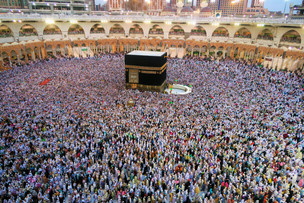
The rituals require performers to complete seven circuits at the Ka'bah after they complete their Arafat and Muzdalifah rituals.
Why It's a Pillar:
The main tawaf of Hajj requires this operation which differs from both arrival tawaf which is a sunnah and farewell tawaf which is a wajib.
When:
The designated time for activities begins after Fajr on 10th Dhul Hijjah which is the day of Eid and continues after people return from Muzdalifah.
Recommended: The activity should occur on 10th because it remains valid until the conclusion of Dhul Hijjah period although people should avoid postponing it.
Before This Tawaf:
Most pilgrims:
- The 10th morning sees them perform their stoning ritual at the big Jamarat which is known as Jamrat al-Aqabah.
- Shave/trim hair
- Then perform Tawaf al-Ifadah
- Then perform Sa'i (if doing it separately)
How to Perform Tawaf:
Step 1: Preparation
- Be in state of wudu (ablution)
- Men should uncover right shoulder (idtiba') - wrap upper garment under right arm, over left shoulder
- Face the Black Stone
- Make intention for Tawaf al-Ifadah
Step 2: Begin
- Start at the Black Stone
- Raise hands and say "Allahu Akbar"
- Kiss the Black Stone if possible (usually impossible due to crowds)
- Or touch it with hand and kiss your hand
- Or just point to it and say "Allahu Akbar"
Step 3: The Seven Circuits
- Walk counterclockwise around Ka'bah
- Men: First three circuits should be done at brisk pace (raml) - quick walk
- Last four circuits at normal pace
- Women: Normal pace throughout
- Each time you pass the Black Stone, point to it and say "Allahu Akbar"
- Make dua throughout
Between Yemeni Corner and Black Stone: Say: "Rabbana atina fid-dunya hasanah wa fil-akhirati hasanah wa qina 'adhaban-nar" (Our Lord, give us good in this world and good in the Hereafter and save us from the punishment of the Fire)
Step 4: Complete Seven Circuits
- Seven complete circuits = one tawaf
- After seventh circuit, cover both shoulders again
Step 5: Pray Two Rak'ahs
- At Maqam Ibrahim (if possible - usually very crowded)
- Or anywhere in the Haram
- Two short rak'ahs
Key Points:
- Tawaf must be seven circuits. Six and a half doesn't count.
- Must be around the Ka'bah, outside the Hijr Ismail wall
- Purity required (wudu)
- If you break wudu mid-tawaf, renew wudu and continue from where you stopped
Ahmed said: "I was terrified of losing count during tawaf. I used a counter app on my phone. Worked perfectly. No shame in using tools. What matters is completing seven circuits correctly."
Pillar 4: Sa'i Between Safa and Marwah
What It Is:
Walking/running between the two small hills of Safa and Marwah, seven times.
Why It's a Pillar:
Commemorates Hajar's (Hagar's) search for water for her infant son Ismail. Allah made this a pillar of Hajj.
When:
After Tawaf al-Ifadah.
For Tamattu': If you did Sa'i with your Umrah, you must do it again for Hajj.
How to Perform Sa'i:
Step 1: Start at Safa
- Climb/approach Safa hill
- Face the Ka'bah
- Raise hands
- Say: "Inna as-Safa wal-Marwata min sha'a'iri Allah" (Indeed, Safa and Marwah are among the signs of Allah)
- Say "Allahu Akbar" three times
- Make dua
Step 2: Walk to Marwah
- Walk the distance between Safa and Marwah
- Between the two green lights, men should jog/run
- Women walk normally throughout
- Make dua, dhikr throughout
Step 3: Reach Marwah
- Face Ka'bah
- Raise hands
- Make dua
- This completes one lap
Step 4: Return to Safa
- Walk back to Safa
- Men jog between green lights
- This completes second lap
Step 5: Continue
- Safa to Marwah = 1 lap
- Marwah to Safa = 2 laps
- Continue until 7 laps complete
- End at Marwah
Key Points:
- Seven laps total (not fourteen)
- Start at Safa, end at Marwah
- If you lose count, assume the lower number (be safe)
- Purity (wudu) not required but recommended
- Can drink Zamzam during Sa'i
Zaynab shared: "I'm not athletic. I worried about Sa'i. But it's not a race. You can walk slowly. Take breaks. What matters is completing seven laps, not the speed. I took my time. Made lots of dua. It was beautiful."
Additional Essential Acts (Debated if Pillar or Wajib)
Shaving or Trimming Hair (Halq or Taqsir)
What It Is:
Men: Shaving head completely (halq - better) or trimming at least 1 inch from all over (taqsir).
Women: Trimming fingertip-length from the ends of hair.
When:
After stoning Jamrat al-Aqabah on 10th Dhul Hijjah.
Why Important:
Marks exiting from most ihram prohibitions. Most scholars consider it wajib (mandatory), some consider it a pillar.
How to Do:
Men: Barbers are available in Mina. Or your group provides this. Or use electric trimmer.
Women: Take a small section from the end of your braid, trim about half-inch to one inch. Done.
Proper Sequence (Tartib)
What It Is:
Performing the pillars in correct order.
The Sequence:
- Ihram
- Wuquf at Arafat
- Tawaf al-Ifadah
- Sa'i
If you do Tawaf before Arafat, it doesn't count. Sequence matters.
Exception: On 10th Dhul Hijjah (Eid day), there's flexibility in the order of:
- Stoning
- Shaving
- Tawaf
- Sacrifice
The Prophet was asked: "I did X before Y." He said: "No problem, go ahead."
What If You Miss a Pillar?
Scenario 1: You're Still in Saudi Arabia
Go back and perform it. Even if days later. Even if you already left Makkah. Return and complete the pillar.
Scenario 2: You Already Left Saudi Arabia
You must return to Makkah and perform the missed pillar. Until you do, your Hajj is incomplete.
Scenario 3: Genuine Inability
If genuinely unable to perform a pillar (medical, etc.), consult scholars immediately for guidance.
Important: This is why knowing the pillars is critical. You cannot substitute them with anything else.
Ibrahim shared: "A woman in our group got sick during Tawaf. Completed only 5 circuits, then fainted. Hospitalized. After recovery, she went back and completed a full new tawaf. You can't complete 2 circuits and call it done. Must do all seven."
Common Questions
Q: What if I forget how many tawaf circuits I've done? A: Assume the lower number. Think you did 5 or 6? Assume 5. Complete 2 more.
Q: Can I do Sa'i before Tawaf al-Ifadah? A: No. Tawaf must come first (exception: if doing Sa'i with Tawaf al-Qudum earlier).
Q: What if I can't stand at Arafat due to medical reasons? A: Your attendant must wheel you or drive you through Arafat boundaries during the valid time. Even if you're unconscious, your presence counts.
Q: Can I do Tawaf in wheelchair? A: Yes, absolutely. Many pilgrims do.
Q: What if my period starts before Tawaf al-Ifadah? A: Wait until purity returns. Then perform it. Even if that means delaying departure.
Conclusion: Focus on What Matters
Hajj is beautiful. Overwhelming. Life-changing.
But it's also doable. Especially when you focus on the essentials.
Four pillars:
- Ihram
- Arafat
- Tawaf al-Ifadah
- Sa'i
Get these right. Everything else has solutions, corrections, penalties.
But the pillars? Non-negotiable.
Understand them. Prepare for them. Execute them carefully.
And when you're standing at Arafat, millions around you, sun beating down, hands raised, tears flowing—you'll know: This is why you came. This is the pillar that is Hajj itself.
May Allah accept your Hajj. May He make the pillars easy for you. May you complete them all with excellence.
And may you return home forgiven, purified, transformed.
The pillars aren't just acts of worship. They're the structure holding up your entire Hajj. Respect them. Learn them. Complete them.
That's how you build a Hajj mabrur—an accepted pilgrimage.
Labbayka Allahumma labbayk.