
May 17th 2026
Ihram Rules for Hajj
You're on the plane to Jeddah. The captain announces: "We're approaching the Miqat. Those intending Hajj or Umrah should enter ihram now."
Everyone around you starts changing. Men wrapping white cloths. Women adjusting hijabs. You're frozen. Terrified.
"Did I bring everything? How do I wrap this? What if it falls off? What am I allowed to do? What if I mess up?"
Your neighbor sees your panic. Hands you a safety pin. Smiles. "First time? Don't worry. It's simpler than you think. Just follow the rules. Allah is merciful with mistakes."
But what ARE the rules? What's forbidden in ihram? What's allowed? What happens if you break a rule?
I remember my first ihram. Standing in the airplane bathroom. Trying to wrap two pieces of cloth around my body. They kept falling. I was sweating. Panicking. Other men waiting outside.
I emerged looking like I was wrapped in bedsheets. Awkward. Uncomfortable. Terrified of breaking some unknown rule.
That anxiety lasted my entire Umrah. "Can I scratch my head? Can I use soap? What about this? What about that?"
Second time, I knew the rules. Same ihram. Same restrictions. But no anxiety. Because knowledge removes fear.
Let me give you that knowledge. The rules of ihram. Clear. Complete. Practical.
Because understanding ihram? That's how you focus on worship instead of constant worry.
What Is Ihram?
Two Meanings:
- The State: A sacred state of consecration for Hajj/Umrah. Like being "on spiritual duty."
- The Clothing: The specific garments worn during this state (especially for men).
The Purpose:
Reminds you that you're:
- In Allah's presence
- Equal to everyone (rich and poor dressed the same)
- Stripped of worldly status
- Focused entirely on worship
The Duration:
From when you enter ihram until you complete your Hajj/Umrah rituals and exit ihram.
Could be hours (Umrah). Could be days (Hajj).
Dr. Ahmed explained: "Ihram restrictions feel difficult. But that's the point. You're training your nafs (ego). Proving: I can control my desires. I can obey Allah even when uncomfortable. That's spiritual growth."
When Do You Enter Ihram?
From Where:
The Miqat—designated boundary points around Makkah.
For Air Travelers:
Usually enter ihram on the plane before crossing the Miqat.
Captain announces when. Flight attendants remind you.
For Land Travelers:
Stop at the Miqat point. Enter ihram there.
The Miqat Points:
- Dhul-Hulayfah (for those coming from Madinah direction)
- Al-Juhfah (for those from Syria/Egypt direction)
- Qarn al-Manazil (for those from Najd direction)
- Yalamlam (for those from Yemen direction)
- Dhat 'Irq (for those from Iraq direction)
Important:
Cannot pass the Miqat without ihram if intending Hajj/Umrah. If you do, must return to Miqat or pay penalty.
Fatima shared: "I was nervous about changing on the plane. Tiny bathroom. People waiting. But everyone's in the same situation. Flight attendants are helpful. I changed. Made intention. That's it. Simpler than I imagined."
How to Enter Ihram: The Process
Step 1: Preparation (Before Wearing Ihram)
Physical Cleanliness:
For Everyone:
- Trim nails
- Remove underarm and pubic hair
- Perform ghusl (full ritual bath)—highly recommended, not obligatory
For Men:
- Can apply perfume to BODY (not to ihram garments)
- Remove all sewn clothing
For Women:
- Can apply perfume to body (not clothes)
- Continue wearing regular modest clothing
Why Perfume Before:
You're allowed (even recommended) to apply perfume before entering ihram.
After entering ihram: no perfume at all.
The Wisdom:
Clean yourself thoroughly before entering the sacred state.
Step 2: Put On Ihram Garments
For Men:
Two white unstitched cloths:
Izar: Lower garment. Wrapped around waist to ankles.
Rida: Upper garment. Draped over shoulders and torso.
How to Wrap:
- Izar: Like a wraparound skirt. Secured at waist.
- Rida: Over left shoulder, under right arm (for tawaf). Or covering both shoulders (for travel).
Use Safety Pins or Belt:
To keep it secure. Ihram falling off is embarrassing and distracting.
Footwear:
Sandals only. Toes and heels must be exposed.
For Women:
Regular modest clothing:
- Any color (doesn't have to be white)
- Long dress/abaya
- Hijab covering hair
- Can wear socks and any shoes
What to Avoid:
- Niqab (face covering)—majority say don't wear it in ihram
- Gloves (according to most scholars)
Step 3: Intention (Niyyah)
In Your Heart:
Make clear intention: "I'm entering ihram for Hajj" or "for Umrah."
Say Out Loud:
For Umrah: "Labbayka Allahumma bi-'Umrah" (Here I am, O Allah, for Umrah)
For Hajj: "Labbayka Allahumma bi-Hajj" (Here I am, O Allah, for Hajj)
For Both (Qiran): "Labbayka Allahumma bi-Hajjin wa 'Umrah" (Here I am, O Allah, for Hajj and Umrah)
Step 4: Begin the Talbiyah
Immediately start reciting:
"Labbayka Allahumma labbayk, labbayka la shareeka laka labbayk. Innal-hamda wan-ni'mata laka wal-mulk, la shareeka lak."
Translation:
"Here I am, O Allah, here I am. Here I am, You have no partner, here I am. Verily all praise, grace and sovereignty belong to You. You have no partner."
Men: Recite loudly (not shouting, but raised voice). Women: Recite softly.
You're Now in Ihram:
All restrictions apply from this moment.
Ahmed told me: "Wrapping ihram seemed complicated. I practiced at home before Hajj. By the time I was on the plane, I could do it in 2 minutes. Practice beforehand. Seriously. Makes it so much easier."
The Prohibitions: What You CANNOT Do
These apply to both men and women unless specified.
1. No Perfume or Scented Products
Forbidden After Entering Ihram:
- Applying perfume
- Using scented soap
- Scented shampoo
- Scented lotion or cream
- Scented deodorant
- Scented oils
- Scented tissues or wipes
Allowed:
- Perfume applied BEFORE entering ihram (it's sunnah)
- Unscented soap
- Unscented deodorant
- Unscented shampoo
- Unscented lotion
The Scent from Before:
If you applied perfume before ihram and the scent remains, that's fine. Don't wash it off.
Accidental Exposure:
If someone's perfume accidentally touches you, no penalty if truly accidental. Just avoid it going forward.
2. No Cutting Hair or Nails
Forbidden:
- Cutting/trimming any hair from any part of the body
- Cutting/trimming nails
- Shaving
- Plucking eyebrows
- Even removing a single hair deliberately
Accidental Hair Loss:
Natural shedding or accidentally pulled out: no penalty.
Can You Scratch:
Yes, gently. Just don't deliberately pull hair out.
What About Wudu:
If hair naturally falls during ablution: no problem.
3. No Sexual Activity
Completely Forbidden:
- Sexual intercourse
- Foreplay
- Lustful touching
- Anything sexual in nature
Hand-Holding:
Non-lustful hand-holding with spouse: debated.
Majority say avoid it to be safe.
The Seriousness:
Sexual intercourse before standing at Arafat: invalidates Hajj. Must repeat next year. Plus major penalty.
After Arafat but before exiting ihram: doesn't invalidate Hajj but major penalty required.
4. No Hunting or Killing Land Animals
Forbidden:
- Hunting land animals
- Killing land animals (even lice—strict opinion)
- Directing others to hunt
- Helping someone hunt
Harmful Creatures:
Can kill dangerous animals threatening you (scorpions, rabid dogs, snakes).
Pests:
Mosquitoes, flies: strict opinion says don't kill. Lenient opinion allows it. Try to avoid if possible.
Sea Animals:
Allowed. Prohibition is for land game only.
5. No Fighting, Arguing, or Foul Language
Forbidden:
- Arguing
- Fighting
- Quarreling
- Cursing
- Obscene language
- Losing temper
The Qur'an Says:
"So whosoever intends to perform Hajj therein, then he should not have sexual relations, nor commit sin, nor dispute unjustly during Hajj." (2:197)
Control Your Temper:
Even if someone pushes you. Steps on you. Is rude. Control yourself.
Normal Speech:
You can talk normally. Prohibition is against fighting and arguing, not regular conversation.
Zaynab said: "Someone stepped on my foot during tawaf. Hard. I almost yelled. Then remembered: I'm in ihram. I smiled (painfully) and moved on. That moment—choosing silence over anger—taught me more about self-control than a hundred lectures."
6. For Men ONLY: No Covering the Head
Forbidden:
- Hats, caps, turbans
- Covering head with cloth or towel
- Putting anything directly on the head
- Hoods
Allowed:
- Carrying things on your head (like luggage)
- Standing under umbrella or shade
- Being in tent or car (roof overhead is fine—you're not covering your head with it)
Sleeping:
Can't put pillow over your head. Sleep on your side with head uncovered.
7. For Men ONLY: No Sewn Garments
Forbidden:
- Shirts, t-shirts
- Pants, underwear
- Socks
- Gloves
- Any clothing sewn to fit body parts
Allowed:
- Belt to keep ihram secure
- Safety pins
- Sandals (heels and toes exposed)
- Backpack or bag
What About Underpants:
Not allowed. Most men wear nothing under ihram.
Some wear unsewn cloth (like diaper-style). Allowed if not sewn.
8. For Women: No Face Covering (Majority Opinion)
The Ruling:
Majority of scholars: women should NOT cover their faces in ihram.
Exception:
When non-mahram men are very close, she can lower her scarf partially over her face (but shouldn't let it touch the face directly).
Hands:
Women can wear gloves (most scholars). Though some say better not to.
Regular Modest Clothing:
Women wear their normal modest clothes. Any color. Nothing special required.
Ibrahim asked: "Can I wear prescription glasses in ihram?" Yes. Glasses are fine for both men and women.
What You CAN Do in Ihram
People think ihram is all restrictions. Here's what's still allowed:
Personal Hygiene
- Shower/bathe (with unscented soap)
- Brush teeth
- Use miswak
- Wash your ihram garments
- Change your ihram if it gets dirty (men)
- Change your regular clothes (women)
Basic Needs
- Eat and drink normally
- Sleep
- Sit, walk, rest
- Use bathroom
- Take medication
- Use unscented cream for dry skin
Physical Actions
- Scratch gently (not pulling hair out)
- Look in mirror
- Wear glasses or watch
- Carry bags or luggage
- Use phone (though minimize distractions)
- Use belt or safety pins (men)
Social Interaction
- Talk normally
- Give advice
- Teach
- Non-lustful interaction with spouse (hand-holding debated)
Omar said: "I was afraid to shower in ihram. Thought it would 'break' it somehow. But you can shower. Just use unscented soap. I showered daily during Hajj. Felt fresh. No issues."
Penalties If You Break a Rule
Mistakes happen. Don't panic.
Categories:
Minor Accidental:
- Accidentally used scented soap once
- A hair fell out naturally
- No penalty
Deliberate Minor:
- Deliberately cut a few hairs
- Deliberately applied perfume once
- Penalty: Fidyah—feed 6 poor people, OR fast 3 days, OR sacrifice sheep
Hunting:
- Penalty: Varies based on animal hunted
Sexual Intercourse:
- Before Arafat: Hajj invalid. Must repeat next year. Major penalty.
- After Arafat: Hajj valid. Major penalty required.
If You Violate:
Consult a scholar there about the specific penalty.
Don't ignore it. Fulfill the penalty.
Different Rules for Men vs Women: Quick Summary
Men:
- Two unstitched white cloths
- Cannot cover head
- Cannot wear sewn clothes
- Cannot wear socks
- Sandals (toes and heels exposed)
Women:
- Regular modest clothing (any color)
- Must cover hair
- Should NOT cover face (majority opinion)
- Can wear sewn clothing
- Can wear socks and shoes
- Can wear gloves (most scholars)
Both:
- No perfume/scented products
- No cutting hair/nails
- No sexual activity
- No hunting/killing
- No arguing/fighting
Common Questions
Q: Can I shower daily? A: Yes. Use unscented soap.
Q: What if my period starts? A: Stay in ihram. Can't do tawaf until pure. Everything else is fine.
Q: Can I change my ihram clothes? A: Yes (men). Wash them or wear new ones.
Q: What about sunscreen? A: Allowed if unscented.
Q: Can I take pain medication? A: Yes.
Q: What if someone applies perfume near me? A: Passive smelling is unavoidable and excused. Don't deliberately smell perfume.
Q: Can I wear prescription glasses? A: Yes, both men and women.
Q: Can I use my phone? A: Yes. Though minimize distractions and focus on worship.
Practical Tips
For Men:
- Practice wrapping ihram at home before your trip
- Use safety pins or belt to secure it
- Bring 2-3 sets in case one gets dirty
- Comfortable sandals you can walk in for hours
- Keep ihram on until you're told to remove it
For Women:
- Comfortable modest clothes (it gets hot)
- Hijab that covers hair but leaves face clear
- Comfortable shoes for lots of walking
- Unscented toiletries clearly labeled
- Don't stress about face covering—majority say keep it uncovered
For Both:
- Buy unscented products before you go
- Label them so you don't accidentally use scented
- Set phone reminder: "I'm in ihram—check before doing anything"
- When in doubt, ask a scholar there
- Small mistakes aren't the end of the world—Allah is merciful
Exiting Ihram
When:
For Umrah: After completing all rituals (tawaf, sa'i, and shaving/trimming hair).
For Hajj: Two stages:
- First tahallul (after stoning, sacrifice, and shaving on 10th): Most restrictions lifted. Still can't have relations.
- Second tahallul (after Tawaf al-Ifadah): All restrictions lifted.
How:
Just remove the ihram garments (men) or change your mindset (women). Resume normal life.
The Relief:
That moment when you exit ihram? After days of restrictions? It feels like liberation.
Conclusion: A Sacred State, Clear Rules
Ihram seems overwhelming. So many rules. So many restrictions.
But break it down:
- No perfume/scented things
- No cutting hair/nails
- No hunting
- No fighting
- No sexual activity
- Men: no head covering, no sewn clothes
- Women: no face covering (majority)
That's it. Everything else is allowed.
The Purpose:
Ihram isn't punishment. It's training. Teaching you:
- Self-control
- Obedience
- Equality (all dressed the same)
- Focus on Allah, not worldly comforts
Yes, You'll Make Mistakes:
Everyone does. First-timers especially. Allah is merciful. There are penalties for a reason—you pay it and continue.
The Point:
Do your best. When in doubt, ask. Trust Allah's mercy.
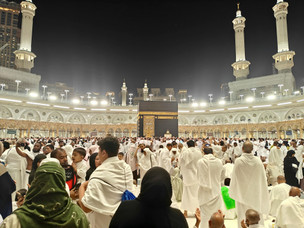
When you're in those two white cloths (men) or modest outfit (women), standing before the Ka'bah, remember:
You're in a sacred state. Stripped of worldly vanity. Equal to every other pilgrim. Focused entirely on Allah.
That's ihram. Not a burden. A blessing.
May Allah make ihram easy for you. May He accept your Hajj and Umrah. And may you complete them with excellence.
Labbayka Allahumma labbayk.